

Walking through the food markets of Lagos at sunrise, you’re immediately immersed in a sensory experience that defines Nigerian identity. The aroma of freshly ground pepper mingles with the sight of pyramids of tomatoes, while vendors call out their wares in a symphony of languages. This is where Nigerian food culture truly begins, not in restaurants or cookbooks, but in the bustling markets where tradition meets commerce.
Nigerian food culture represents far more than what appears on a plate. It embodies the collective wisdom of over 250 ethnic groups, each contributing unique flavors, techniques, and traditions that have evolved over millennia. Understanding Nigeria’s food culture means exploring how meals serve as social glue, cultural identity markers, and expressions of hospitality that transcend mere sustenance.
Read Also: Exploring Nigerian Cuisine: 3 Traditional Recipes Everyone Should Know
What Defines Nigerian Food Culture?
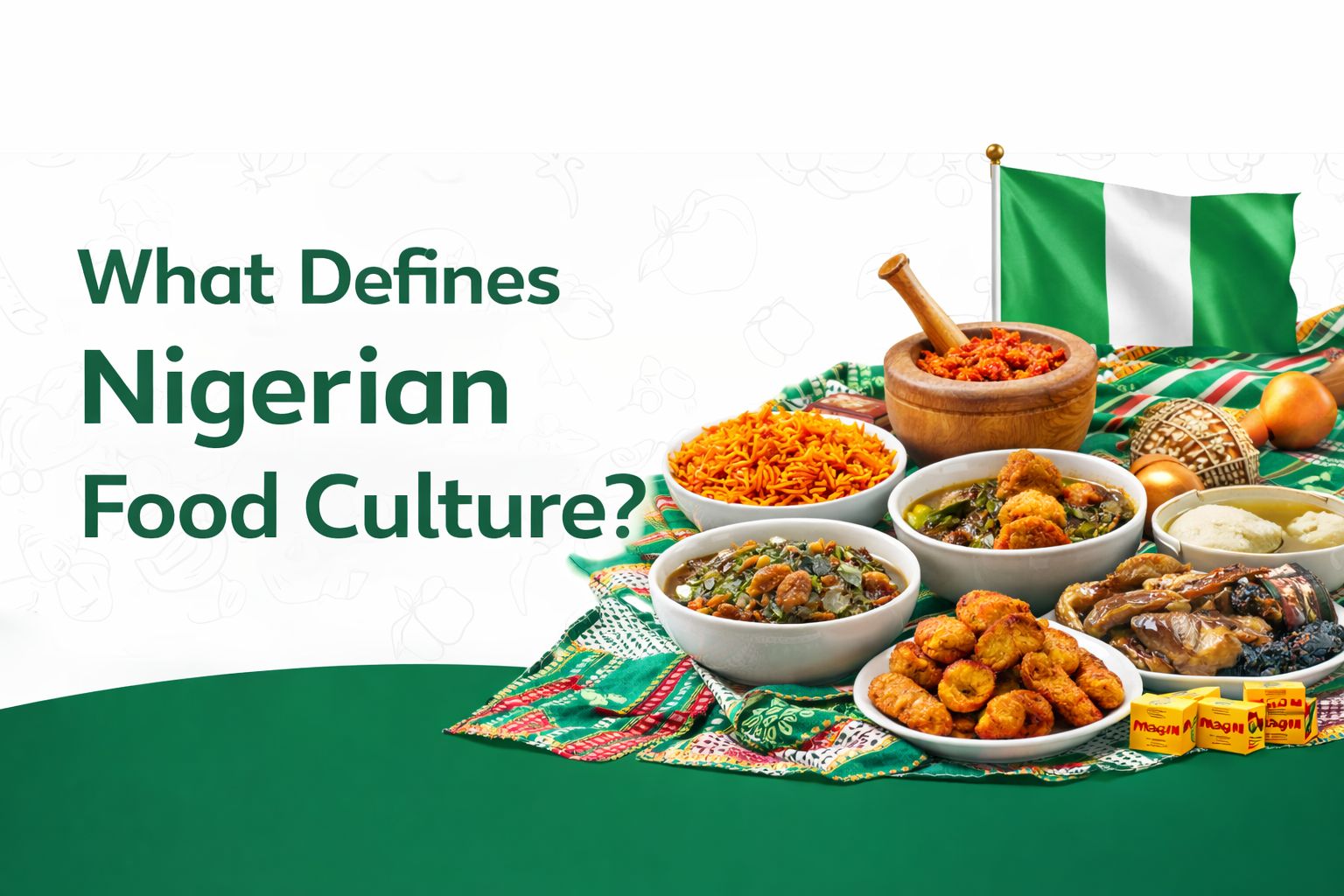
Nigerian food culture encompasses the entire ecosystem of beliefs, practices, and social conventions surrounding how people produce, prepare, share, and celebrate meals across the nation. With Nigeria being Africa’s most populous country and home to incredible ethnic diversity, its food culture operates on multiple interconnected levels simultaneously.
At the family level, each household maintains specific recipes and cooking techniques passed down through generations. Your grandmother’s method of preparing egusi soup differs from your neighbor’s, creating distinct family culinary identities even within the same ethnic group.
The ethnic dimension introduces broader patterns. Igbo culinary traditions differ systematically from Hausa-Fulani practices in ingredients, preparation methods, meal timing, and social conventions. These distinctions remain remarkably strong despite decades of urbanization and internal migration.
Regional characteristics add another layer of complexity. Southern Nigerian cuisine, regardless of specific ethnic origin, shares certain features like heavy palm oil usage, preference for pounded starches, and abundant leafy vegetable soups. This contrasts sharply with Northern cuisine’s reliance on grain-based starches, groundnut-based soups, and dairy products.
Finally, the national level encompasses dishes transcending ethnic boundaries. Jollof rice, suya, and moin-moin appear throughout Nigeria with regional variations, creating a shared culinary language that unites the nation.
The Social Foundation of Nigerian Food Culture
Food in Nigeria functions primarily as a social activity rather than individual sustenance. Meals create opportunities for gathering, conversation, relationship-building, and status display. The quality and quantity of food served communicates powerful messages about respect, social standing, and cultural values.
Time invested in food preparation demonstrates love and care. Quick meals serve functional purposes, but important occasions demand hours of meticulous preparation. The labor involved in pounding yam, carefully layering flavors in complex soups, or hand-grinding peppers on a stone, this effort carries profound meaning beyond nutrition.
According to data from Nigeria’s National Bureau of Statistics, food expenditure accounts for approximately 56.7% of household spending, highlighting how central nourishment remains to Nigerian life even when creating economic strain.
The Three Major Cultural Influences on Nigerian Cuisine
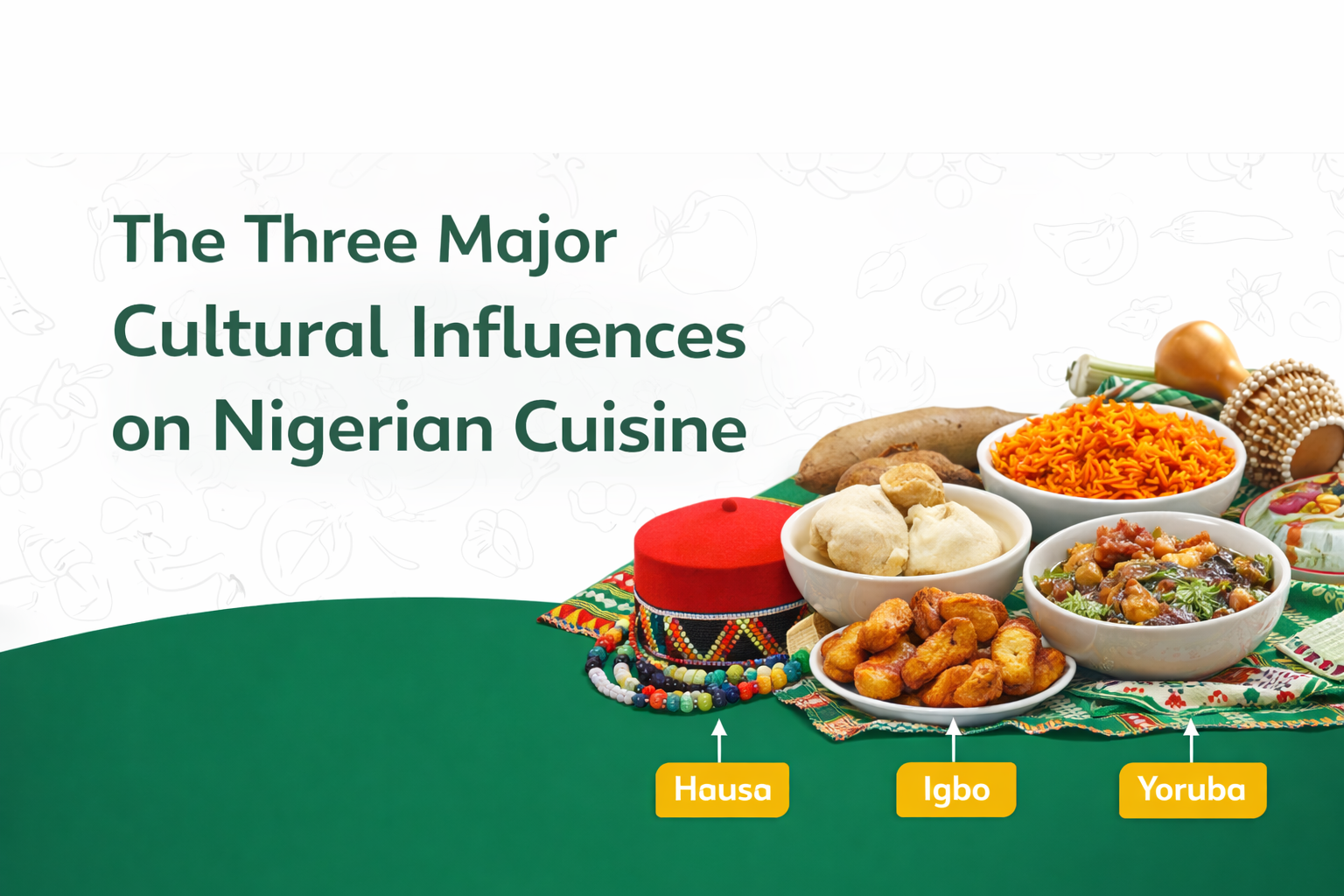
While Nigeria boasts over 250 ethnic groups, three major cultural blocks predominantly shape the culinary landscape, each bringing distinctive ingredients, techniques, and food customs.
Hausa-Fulani Culture: Northern Traditions
The Hausa-Fulani people represent Nigeria’s largest ethnic group, concentrated in northern states like Kano, Kaduna, Sokoto, and Katsina. Islamic culture profoundly influences their food practices, including halal meat preparation and alcohol avoidance.
Their cuisine reflects both agricultural traditions: cultivating millet, sorghum, and groundnuts and pastoralism, incorporating dairy products and beef. The celebrated fura da nono exemplifies this fusion, combining millet balls with fermented cow’s milk to create a cooling drink perfectly suited to the hot Northern climate.
Signature Northern Dishes:
- Tuwo: Thick pudding made from millet, sorghum, or maize flour
- Fura da nono: Spiced millet balls floating in fermented milk
- Kilishi: Spiced dried meat similar to beef jerky
- Miyan taushe: Silky pumpkin stew requiring patient seasoning
- Miyan kuka: Nutritious baobab leaf soup
Hospitality in Hausa-Fulani culture centers entirely around food sharing. No guest ever leaves a Hausa household hungry, the quantities of rice, meat, and tuwo prepared for ceremonies can astound first-time visitors.
Igbo Culture: Southeastern Sophistication
The Igbo people, primarily inhabiting Anambra, Enugu, Imo, Abia, and Ebonyi states, have developed perhaps Nigeria’s most diverse range of soups. Their food culture emphasizes fresh ingredients, complex flavor profiles, and labor-intensive preparation methods that demand skill and patience.
Christianity influences modern Igbo food culture, though traditional practices like the New Yam Festival (Iri ji) remain culturally vital. This annual celebration honors the yam harvest with elaborate ceremonies where the oldest community member eats the first new yam, symbolizing connections between food, spirituality, and social hierarchy.
Signature Igbo Dishes:
- Ofe onugbu: Bitter leaf soup with complex layered flavors
- Ofe nsala: White soup without palm oil
- Abacha: African salad made from shredded cassava
- Nkwobi: Spiced cow foot delicacy
- Ugba: Fermented oil bean seeds
Igbo cuisine utilizes specialized ingredients like ogiri (fermented locust beans), achi (thickening agent), and uziza seeds (spicy pepper seeds) that require expert knowledge to prepare correctly. These ingredients create the distinctive flavors making Igbo soups unmistakable.
Yoruba Culture: Western Diversity
The Yoruba people, concentrated in Lagos, Oyo, Osun, Ogun, Ondo, and Ekiti states, have perfected Nigeria’s most elaborate “swallow” culture: the art of transforming yams, cassava, and plantains into smooth, elastic puddings paired beautifully with various soups.
Yoruba food culture emphasizes presentation and abundant variety. A proper Yoruba celebration might feature five different soups with three types of swallow, offering guests choices that showcase hospitality and social status.
Signature Yoruba Dishes:
- Amala: Dark yam flour swallow with distinctive taste
- Iyan: Labor-intensive pounded yam
- Efo riro: Vegetable soup packed with spinach and assorted meats
- Gbegiri: Smooth bean soup often paired with ewedu
- Ewedu: Slippery jute leaf soup
The Yoruba proverb “Oun ta o je l’agba oun ta o se” (What we eat takes precedence over what we do) perfectly captures food’s central role in Yoruba identity.
Regional Culinary Characteristics Across Nigeria
| Region | Primary Groups | Signature Dishes | Key Ingredients | Cooking Techniques |
| North-West | Hausa-Fulani | Tuwo, Fura da nono | Millet, sorghum, dairy | Boiling, fermenting |
| North-East | Kanuri, Fulani | Miyan kuka, Kilishi | Baobab leaves, beef | Grilling, sun-drying |
| North-Central | Tiv, Nupe, Gbagyi | Kunu, Awara | Maize, soybeans, fish | Fermenting, frying |
| South-West | Yoruba | Amala, Efo riro | Yam flour, vegetables | Pounding, slow cooking |
| South-East | Igbo | Ofe onugbu, Abacha | Bitter leaf, cassava | Extended simmering |
| South-South | Efik, Ijaw, Urhobo | Edikang ikong, Banga | Waterleaf, palm fruit | Rich broths, boiling |
Essential Nigerian Food Customs and Etiquette
Nigerian food customs reflect deep-rooted values about respect, hygiene, community, and social order. Understanding these practices proves essential for anyone engaging with Nigerian culture.
Hand Washing: The Foundation
Washing hands before eating stands as the most fundamental Nigerian food custom. This practice ensures hygiene and demonstrates respect for the meal and those sharing it. In traditional settings, water is brought to guests in a bowl with soap, allowing them to wash before dining.
Right Hand Only
Nigerians traditionally eat with their right hand, using it for taking food and passing dishes. This custom has both hygienic and cultural significance, as the left hand is reserved for other purposes. Even when using utensils at formal gatherings, this principle often guides table manners.
Respecting Elder Priority
Age hierarchy profoundly influences Nigerian dining customs. Elders must be served first and begin eating before younger people start. When sharing meat or fish from a communal bowl, younger diners exercise caution, avoiding choice pieces until elders have taken their portions.
Communal Eating Practices
Many Nigerian meals involve multiple people eating from one large bowl. This isn’t merely a practical arrangement but a deliberate cultural practice building community bonds. When eating communally:
- Consume only from the section directly in front of you
- Avoid reaching across to another person’s area
- Moderate your pace to match other diners
- Leave the best pieces of meat or fish for others as respect
The Art of Hospitality
Nigerian hospitality revolves around abundant food provision. Hosts consider it shameful if guests leave hungry, so food appears in generous quantities. Refusing offered food can seem disrespectful, proper etiquette involves accepting at least a small portion and expressing appreciation for the cook’s effort.
Gender and Age Dynamics
Traditional food customs include gender-specific practices, though these are evolving with modernization:
- Men often received food first in traditional households
- Women typically manage food preparation and serving
- Children learn social hierarchy through food distribution patterns
- Special occasions may involve separate eating arrangements for men and women
Iconic Nigerian Dishes: Cultural Significance and Stories
Jollof Rice: The National Pride
Jollof rice stands as Nigeria’s most famous culinary export, a one-pot wonder cooked in spiced tomato sauce that has sparked friendly regional rivalries across West Africa. This dish transcends ethnic boundaries, appearing at virtually every Nigerian celebration.
But jollof rice carries different meanings in different contexts. Party jollof, cooked over wood fires in massive pots with the prized slightly burnt bottom layer, differs entirely from everyday home-style jollof. Wedding jollof occupies its own category, often judged as the measure of whether hosts properly celebrated their union.
The cultural significance extends beyond taste. Serving jollof rice at gatherings signals celebration, abundance, and commitment to proper hospitality. World Jollof Rice Day celebrations and cooking competitions have elevated this dish to symbol of Nigerian culinary pride.
Pounded Yam with Egusi Soup: The Labor of Love
This combination represents perhaps Nigeria’s most iconic traditional meal. Preparing pounded yam involves significant physical labor, pounding boiled yam with mortar and pestle until achieving perfect smoothness. The process requires two people working in synchronized rhythm, like a well-rehearsed dance.
When served to guests, pounded yam signals deep respect and proper hospitality. The accompanying egusi soup, made from ground melon seeds, offers rich, nutty flavors and thick consistency. Traditionally loaded with assorted meats, dried fish, stockfish, and vegetables, it provides complete nutrition alongside cultural connection.

FoodieAfrique54 ground egusi melon 4lb
Enjoy the rich, nutty taste of FoodieAfrique54 Ground Egusi Melon. Perfect for egusi soup, stews, and sauces, this protein-rich superfood is a must-have!
50 in stock
Pepper Soup: Medicine and Comfort
Pepper soup occupies a unique position in Nigerian food culture, serving simultaneously as culinary delight and traditional medicine. Different variations exist across ethnic groups: goat meat, fish, catfish, or cow leg, each suited to specific occasions.
New mothers receive pepper soup to restore strength after childbirth. Funeral attendees might be served pepper soup alongside stronger beverages. The various spices; alligator pepper, African nutmeg, ehuru seeds, are believed to possess healing properties beyond basic nutrition, reflecting traditional African understanding of food as medicine.
Suya: The Street Food King
Suya, the beloved spiced grilled meat, originated in Northern Nigeria but has conquered the entire nation. Thin slices of beef or chicken are coated in groundnut-based spice mix (yaji) before grilling over open flames, creating smoky, spicy perfection.
Suya represents Nigerian street food culture at its finest, informal, accessible, and utterly delicious. From roadside vendors to upscale restaurants, suya appears everywhere, often served with sliced onions, tomatoes, and extra yaji for dipping.
Abart suya spice 8oz
Suya spice, also known as yaji, is a vibrant and flavorful blend of spices that forms the heart and soul of the popular West African street food, suya. This aromatic mixture is a key ingredient in creating the smoky, spicy, and peppery flavor that has captivated taste buds around the globe.
19 in stock
Market Culture: Where Food Stories Begin
Nigerian food culture doesn’t start in kitchens but in traditional markets like Oshodi Market in Lagos, Ariaria Market in Aba, or Kurmi Market in Kano. These bustling spaces showcase raw ingredients fueling Nigerian cuisine while serving as social hubs where relationships develop over time.
The Economics of Fresh Ingredients
Markets reveal which ingredients command premium prices: stockfish, dried prawns, quality palm oil, versus basic staples like garri, beans, and rice. Seasonal variations dramatically affect availability and pricing, with rainy season vegetables differing from dry season options.
Vendor-Customer Relationships
Market shopping transcends simple transactions. Regular customers develop long-term relationships with specific vendors, creating networks of trust involving credit arrangements, recipe advice, and personal updates. These relationships embody the social nature of Nigerian food culture.
Negotiation as Cultural Practice
Price negotiation in Nigerian markets isn’t just about saving money, it’s a cultural interaction establishing relationships and demonstrating market savvy. The back-and-forth between buyer and seller follows familiar patterns, with both parties expecting and enjoying the exchange.
Religious Influences on Food Culture
Religious beliefs significantly shape Nigerian food practices across regions and communities.
Islamic Dietary Laws
In predominantly Muslim Northern Nigeria, Islamic dietary laws profoundly influence cuisine:
- All meat must be halal (slaughtered according to Islamic law)
- Alcohol is avoided in food preparation and serving
- Ramadan fasting creates specific seasonal food patterns
- Eid celebrations feature elaborate meals with specific traditional dishes
Christian Practices
Christian communities, particularly prevalent in Southern Nigeria, maintain their own food customs:
- Lenten fasting periods influence dietary choices
- Christmas and Easter celebrations feature specific dishes
- Church events and ceremonies involve communal feasting
- Prayers of thanksgiving before meals
Traditional African Spirituality
Indigenous religious practices connect certain foods to spiritual observances:
- Kola nut presentation carries spiritual significance in many cultures
- New Yam Festival links harvest to ancestor veneration
- Certain foods are reserved for specific ceremonies
- Food offerings to deities in traditional worship
The Evolution of Nigerian Food Culture
Colonial Influences
Portuguese and British colonial periods introduced new ingredients: rice, tomatoes, cassava, that have become thoroughly integrated into Nigerian cuisine. However, Nigeria maintained remarkably strong culinary independence compared to other colonized nations, preserving indigenous techniques and flavor profiles.
Urbanization and Modernization
Cities like Lagos, Abuja, and Port Harcourt have created hybrid food cultures blending ethnic traditions:
- Fast food adaptations of traditional dishes
- Restaurant versions of home-cooked meals
- Fusion creations combining Nigerian and international flavors
- Increased use of processed ingredients alongside fresh market produce
Diaspora Influence
Nigerians worldwide have elevated their cuisine’s global profile:
- Nigerian restaurants appearing in major international cities
- Social media showcasing Nigerian dishes to global audiences
- Food bloggers and chefs innovating while respecting tradition
- International food festivals featuring Nigerian cuisine
How to Experience Nigerian Food Culture
Learn Basic Cooking Techniques
Authentic appreciation requires hands-on experience with Nigerian cooking methods:
- Practice pounding yam (harder than it appears!)
- Master the stirring motion for smooth eba
- Learn proper seasoning balance for soups
- Understand heat management for different dishes
Attend Cultural Celebrations
Food culture reveals itself most clearly during ceremonies:
- Weddings showcase hospitality at its grandest
- Naming ceremonies introduce traditional meal structures
- Funerals demonstrate food’s role in mourning
- Festivals connect seasonal foods to cultural identity
Study Ingredient Knowledge
Understanding ingredients deepens cultural connection:
- Learn to identify different pepper varieties
- Understand the difference between fresh and dried fish
- Recognize quality palm oil and its uses
- Discover indigenous vegetables and their preparations
Practice Communal Eating
Experience the social dimension of Nigerian meals:
- Share from communal bowls with proper etiquette
- Eat with hands to understand tactile aspects
- Learn pace management when sharing meals
- Appreciate the bonding created through shared food
The Future of Nigerian Food Culture
Nigerian cuisine stands at an exciting crossroads. Young chefs are innovating while respecting tradition, creating modern interpretations of classic dishes. Food tourism is growing as international visitors recognize Nigeria’s culinary richness deserves attention alongside its music, literature, and art.
Diaspora communities serve as cultural ambassadors, introducing Nigerian flavors to global audiences and creating demand for authentic ingredients worldwide. Social media platforms have amplified Nigerian food culture’s visibility, with food bloggers and content creators showcasing traditional recipes to millions.
Yet challenges exist. Rapid urbanization threatens traditional preparation methods as time-constrained city dwellers increasingly rely on shortcuts. Climate change affects ingredient availability and seasonal patterns. Processed food infiltration raises questions about preserving authentic flavors and nutritional traditions.
Despite these challenges, Nigerian food culture demonstrates remarkable resilience. The same diversity that created this rich culinary landscape—over 250 ethnic groups maintaining distinct traditions while creating shared national dishes—ensures adaptability and survival.
Conclusion: Celebrating Nigeria’s Culinary Heritage
Nigerian food culture represents the beating heart of national identity, weaving through every celebration, ceremony, and daily interaction. It embodies resilience, creativity, and the beautiful complexity emerging when diverse ethnic groups maintain their culinary traditions while simultaneously creating shared dishes uniting the nation.
Understanding Nigerian food culture provides a window into Nigerian values—hospitality, community, respect for elders, and the understanding that food serves purposes far beyond mere sustenance. Every soup, every starch, every spice carries centuries of history and cultural meaning worth preserving and celebrating.
Whether you’re Nigerian seeking deeper understanding of your heritage, a food enthusiast exploring new cuisines, or simply curious about one of Africa’s most diverse culinary traditions, Nigerian food culture offers endless discoveries. From the labor-intensive preparation of pounded yam to the friendly jollof rice rivalries uniting West Africa, from market negotiations to elaborate wedding feasts, Nigerian food culture invites you to taste, learn, and appreciate the profound role food plays in human connection.