
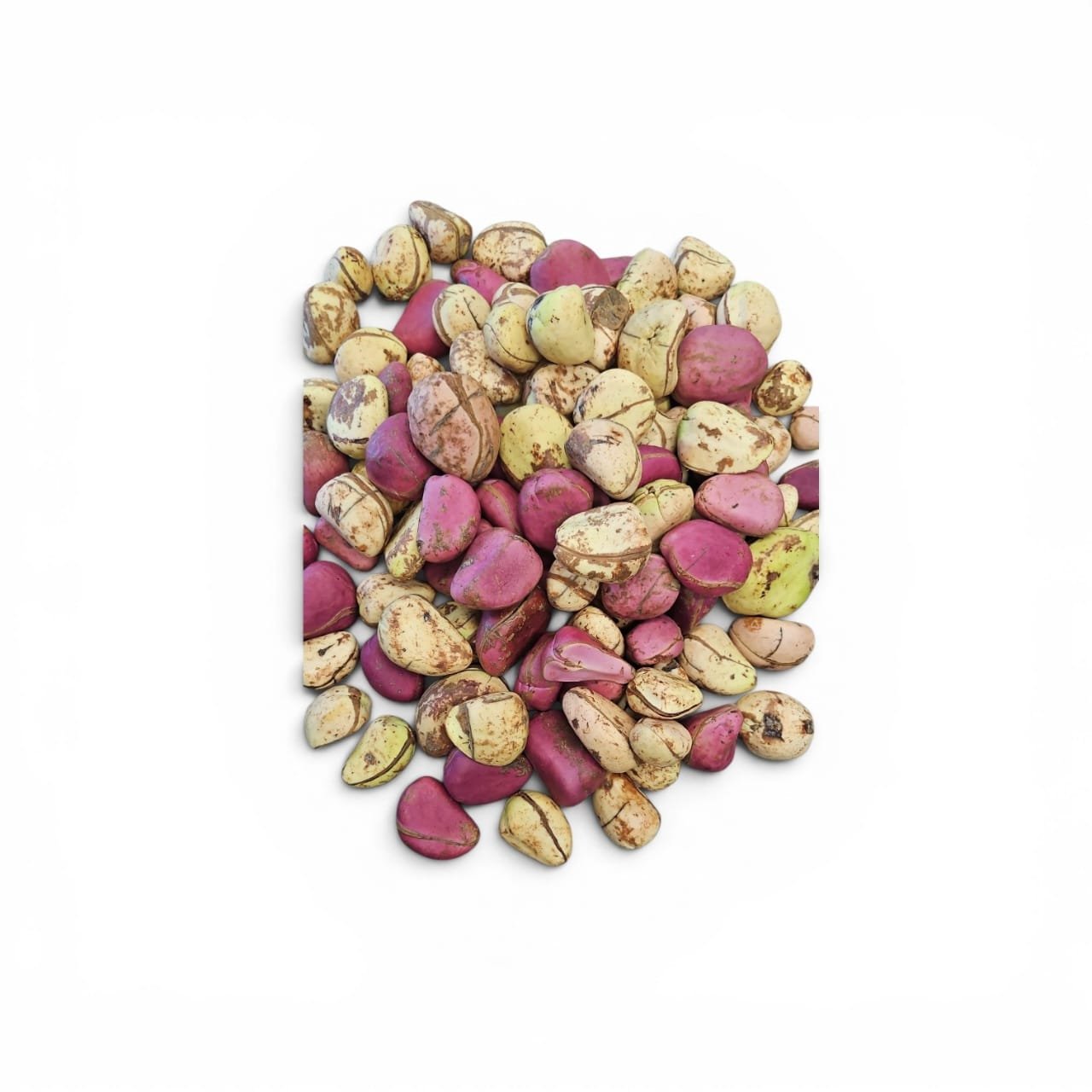
Kola nut are the seeds of trees in the genus Cola, mainly Cola acuminata and Cola nitida. They are native to West Africa and have been used for centuries as both a stimulant, cultural symbol, and traditional ceremonial item.
They are widely traded and culturally important in countries like Nigeria, Ghana, and across other parts of West and Central Africa. Kola nuts grow inside a pod-like fruit on tall tropical trees. Inside each pod are several segmented seeds (the kola nuts), which are harvested, cleaned, and sometimes dried.
Key Features
- Natural seed from the kola tree (Cola species)
- Contains caffeine and theobromine
- Bitter-to-slightly-sweet flavor profile
- Usually chewed raw, not cooked
- Commonly shared socially and culturally
- Long history in African traditions
- Can be fresh or dried
- Naturally stimulating
Uses
1. Traditional and Cultural Use
- Served to guests as a sign of hospitality
- Used in marriage ceremonies and blessings
- Important in West African cultural rituals
- Symbol of respect and unity
2. Social Use
- Chewed during conversations and gatherings
- Shared among elders and community leaders
- Used in greeting ceremonies
3. Stimulant Use
- Chewed for energy and alertness
- Used by travelers, workers, and traders historically
- Sometimes used to stay awake during long hours
4. Traditional Practices
- Used in herbal and cultural wellness systems
- Sometimes combined with other natural herbs
Benefits (Traditional & Functional)
- Helps increase alertness due to caffeine
- May reduce fatigue temporarily
- Acts as a mild appetite suppressant
- Used in traditional cultural bonding
- Provides quick natural stimulation
- Historically used for long-distance travel endurance


Reviews
There are no reviews yet.