
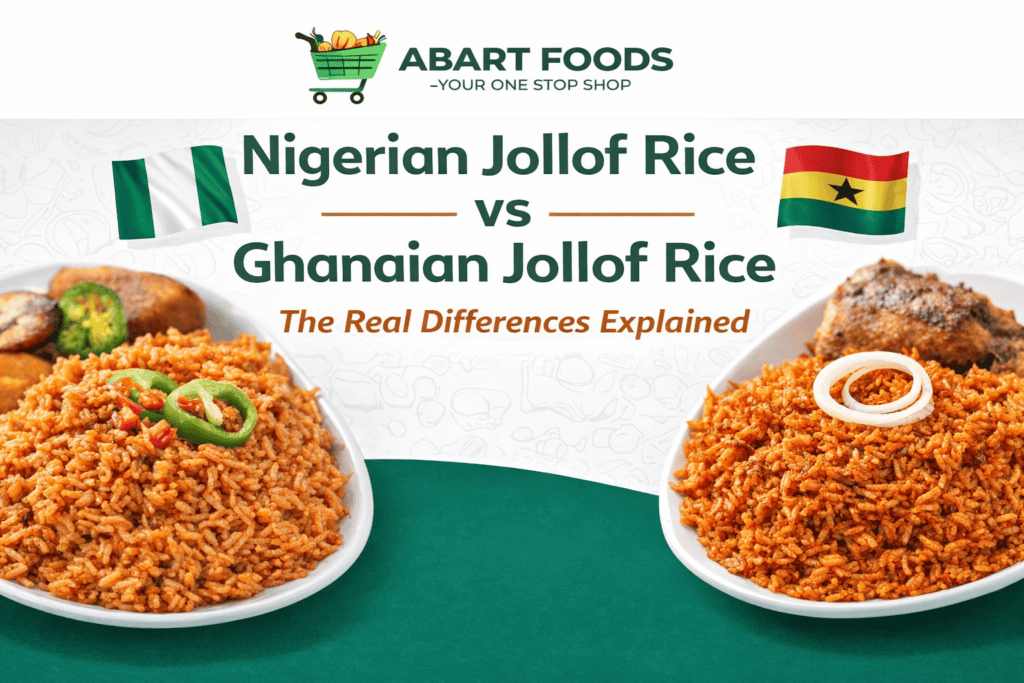
If you have spent any time around West Africans, you already know that jollof rice is not just food. It is culture, identity, and a debate that has been raging on social media, at dinner tables, and across continents for decades. Ask a Nigerian and a Ghanaian whose jollof is better, and you will be there for a while.
But beyond the jokes and the Twitter wars, there are real, meaningful differences between Nigerian and Ghanaian jollof rice. The rice grain, the cooking method, the spice profile, the smoking technique, and even how each version is served are distinct in ways that matter to anyone who loves the dish.
This guide breaks it all down clearly so you know exactly what sets them apart, and so you can cook either version at home using the right ingredients from Abart Foods.
Read Also: How to Cook Authentic Nigerian Soups Abroad Without Losing the Original Taste
Where Did Jollof Rice Come From?

Before settling the debate, it helps to know the origin. Jollof rice did not originate in Nigeria or Ghana. The dish traces back to the ancient Wolof Empire of Senegal and the Gambia, where it was known as thieboudienne, a one-pot rice dish cooked with fish and vegetables. As trade and cultural exchange spread across West Africa, the recipe evolved differently in each country, picking up local ingredients and techniques along the way. UNESCO has since recognized the Senegalese version as an intangible cultural heritage dish.
Today, every major West African country has its own version, but the Nigerian and Ghanaian varieties are the most debated, the most celebrated, and the most cooked in the diaspora.
The Key Differences Between Nigerian and Ghanaian Jollof Rice
1. The Rice
This is the most fundamental difference between the two.

Par excellence parboiled premium long grain rice 10lb
Par Excellence is a well-regarded brand in the rice market, known for its consistent quality and performance in cooking. Their premium parboiled rice is often favored for its fluffy texture, nutty flavor, and ability to remain separate when cooked, making it an excellent choice for a variety of dishes.
3 in stock
Nigerian jollof is made with long-grain parboiled rice. Parboiling partially cooks the rice before it is dried, which helps the grains absorb the tomato sauce while staying separate and fluffy during cooking. The result is a firm, individual grain that holds its shape and soaks up bold flavor.
Ghanaian jollof is traditionally made with Thai jasmine or basmati rice. These long, slender, aromatic grains have a naturally fragrant smell and a slightly softer, stickier texture when cooked. Ghanaians do not parboil basmati because that would make it soggy. Instead, they cook the raw rice directly in the seasoned stew base.
This single difference in rice type creates two noticeably different textures and flavor profiles, even before you get to the spices.
2. The Tomato Base
Both versions start with a blended tomato base that typically includes fresh tomatoes, tomato paste, red bell peppers (tatashe), scotch bonnet or habanero peppers, and onions.
Nigerian jollof often uses a higher ratio of tomato paste for a deeper, richer, more vibrant red color. The blended pepper base is fried down in palm oil or vegetable oil until the raw tomato smell disappears completely and the mixture darkens, which can take 20 to 30 minutes. This frying step is critical and is not rushed.
Ghanaian jollof uses more fresh tomatoes relative to paste, and some recipes incorporate ginger and garlic directly into the blended tomato base. The result is a slightly sweeter, more aromatic sauce. The Ghanaian version also sometimes includes additional onions simmered into the stew for longer, adding sweetness.
3. The Spice Profile

Ama wonda curry 100g
Enhance your cooking with Ama Wonda Curry, a rich blend of premium spices. Perfect for stews, soups, and curries, it delivers bold, authentic flavor in every dish.
49 in stock
Nigerian jollof rice uses bay leaves, thyme, curry powder, white pepper, and sometimes a touch of nutmeg. The seasoning is bold and savory, with the bay leaves contributing a distinctive herbal note that many people associate with classic Nigerian party jollof.
Ghanaian jollof tends to use more spices overall. Ginger, garlic, cumin, coriander, rosemary, anise, and mixed vegetables are all more common in Ghanaian recipes. The flavor is more complex and aromatic, though generally less spicy in terms of chili heat.
4. The Smoky Flavor (Party Jollof)
Here is where Nigerian jollof earns its biggest bragging rights among fans.
Nigerian party jollof rice is traditionally cooked outdoors over an open wood fire. The fire creates intense heat at the base of the pot, causing the bottom layer of rice to caramelize and slightly char. This produces a sought-after smoky flavor and a crispy bottom layer known as the “bottom pot.” It is the most prized part of the pot at any Nigerian party.
Ghanaian jollof does not typically aim for the smoky effect or the charred bottom. The focus is more on even cooking and the fragrant, aromatic quality of the jasmine rice. Less attention is paid to burning or crisping the bottom.
When cooking indoors on a stovetop or in the oven, Nigerian cooks often replicate the smoky bottom-pot effect by turning the heat up high for the final minutes of cooking and leaving the lid on tightly.
5. What It Is Served With

Nigerian jollof is almost always served alongside:
– Fried or grilled chicken
– Fried plantain (dodo)
– Nigerian coleslaw
– Moin moin
– Nigerian salad
Ghanaian jollof is traditionally served with:
– Shito (a smoky, fermented pepper sauce unique to Ghana)
– Fried plantain
– Fried fish or chicken
– Mixed vegetables
The shito pairing is distinctly Ghanaian and adds a layer of depth and heat that sets the Ghanaian plate apart visually and in flavor.
Side-by-Side Comparison
| Feature | Nigerian Jollof | Ghanaian Jollof |
|—|—|—|
| Rice type | Long-grain parboiled rice | Thai jasmine or basmati rice |
| Texture | Firm, separate grains | Softer, slightly aromatic |
| Tomato base | Heavy tomato paste, very red | More fresh tomatoes, slightly sweeter |
| Spices | Bay leaf, thyme, curry, white pepper | Ginger, garlic, cumin, coriander, rosemary |
| Smoky flavor | Yes, especially party jollof | Minimal |
| Bottom pot | Signature feature | Not a focus |
| Served with | Fried chicken, dodo, coleslaw | Shito sauce, fried fish, plantain |
| Heat level | Moderately spicy | Can be spicier depending on peppers used |
How to Make Nigerian Party Jollof Rice at Home in the USA
Getting the right outcome starts with the right ingredients. For authentic Nigerian jollof, you need:
– Long-grain parboiled rice
– Tomato paste
– Fresh tomatoes, red bell peppers (tatashe), and scotch bonnet peppers
– Palm oil or vegetable oil
– Bay leaves, thyme, curry powder, white pepper
Crayfish](https://abartfoods.com/product/abart-crayfish-small/)
– Chicken stock from seasoned, boiled chicken
– Seasoning cubes (Maggi or Knorr)
Method overview:
1. Blend your tomatoes, tatashe, scotch bonnet, and onions. Fry this blend in oil over medium heat for 20 to 30 minutes, stirring regularly, until the paste darkens and the oil floats to the top.
2. Add your chicken stock, bay leaves, thyme, curry, and seasoning. Taste and adjust salt.
3. Wash and parboil your rice for 10 minutes. Drain and add directly to the pot.
4. Stir to combine, cover tightly, and cook over medium heat until the liquid is mostly absorbed.
5. For the smoky party effect, turn the heat to medium-high for the final 5 minutes without opening the lid. The bottom will caramelize and build that signature crust.
Read Also: African Food Meal Prep Guide for Busy Families in the USA
How to Make Ghanaian Jollof Rice at Home
For Ghanaian jollof, the key swap is the rice and the spice additions:
– Thai jasmine or basmati rice (do not parboil)
– Fresh tomatoes, tomato paste, onions, scotch bonnet
– Ginger and garlic blended into the tomato base
– Cumin, coriander, rosemary, and mixed spices
– Vegetable oil
– Chicken or vegetable stock
Method overview:
1. Blend tomatoes, onions, peppers, ginger, and garlic. Fry in vegetable oil for 20 to 25 minutes until reduced and fragrant.
2. Add stock, spices, and salt. Let the base simmer for another 10 minutes.
3. Rinse the jasmine or basmati rice (do not parboil). Add to the pot and stir once.
4. Cook covered on medium-low heat until the rice absorbs all the liquid. Do not stir again.
5. Serve with shito sauce and fried plantain.
Which One Tastes Better?
This is the question that has no single answer, and that is the honest truth.
Nigerian jollof wins on smokiness, richness, and that deeply savory, tomato-forward intensity. Ghanaian jollof wins on fragrance, complexity of spice, and the aromatic quality that jasmine rice brings to the pot.
The best version is the one that reminds you of home, or the one you are about to make with the right ingredients.
Get Everything You Need at Abart Foods
Whether you are cooking Nigerian or Ghanaian jollof, Abart Foods stocks the authentic ingredients you need: parboiled rice, jasmine rice, palm oil, crayfish, scotch bonnet peppers, tomato paste, seasoning cubes, and much more. Delivery is available across the USA, with same-day delivery in Maryland, DC, and Virginia.
Shop Jollof Rice Ingredients at Abart Foods