

Ask anyone who has spent time in Nigeria what they miss most about home, and suya usually comes up within the first few answers. It is spicy, smoky, and sold on nearly every busy street corner once the sun goes down. For Nigerians living abroad, recreating suya is one of the most requested and most misunderstood dishes to get right outside the country.
This guide covers where suya comes from, what actually goes into the spice mix, and how to grill it at home so it tastes close to what you would get from a suya spot in Lagos or Kaduna.
What Is Suya?
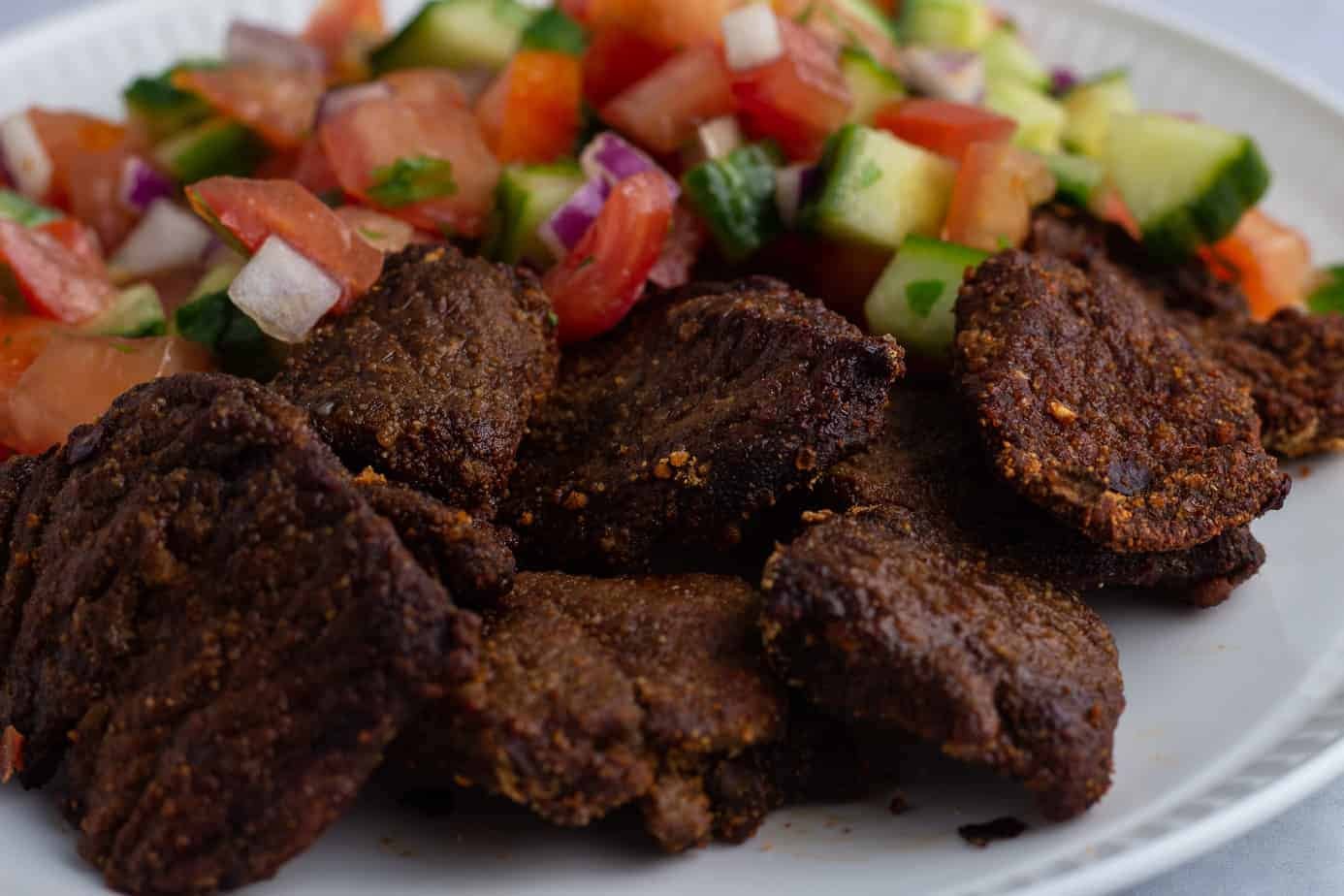
Suya is thinly sliced, skewered beef (or sometimes ram, chicken, or kidney) coated in a dry spice blend called yaji, then grilled over an open flame. It is a street food in the truest sense. Vendors, known as Mai Suya, typically set up in the evening with a charcoal grill, a tray of skewers, and a container of yaji ready to coat each order fresh.
Suya is believed to have originated with the Hausa people of Northern Nigeria and spread across the country and into neighboring West African nations. Today it is sold in Lagos, Abuja, Port Harcourt, and virtually every major Nigerian city, as well as in Nigerian communities across the US, UK, and Europe.
What Is Yaji Spice Made Of?
Yaji is the dry spice blend that gives suya its distinct flavor and orange-red color. While every Mai Suya has their own version, a traditional yaji mix generally includes:
- Ground roasted peanuts (or peanut powder)
- Ground ginger
- Ground garlic
- Cayenne pepper or dried chili powder
- Paprika (for color)
- Ground cloves
- Onion powder
- Salt
- Seasoning cubes, crushed
- Ground crayfish (in some regional versions)

Abart suya spice 8oz
Suya spice, also known as yaji, is a vibrant and flavorful blend of spices that forms the heart and soul of the popular West African street food, suya. This aromatic mixture is a key ingredient in creating the smoky, spicy, and peppery flavor that has captivated taste buds around the globe.
19 in stock
The peanut base is what makes yaji different from most other West African spice blends. It gives the coating a slightly nutty, gritty texture that toasts and darkens as the meat grills.
How to Make Suya at Home
Ingredients
- 2 pounds beef sirloin or flank steak, thinly sliced
- 1 cup roasted peanuts, ground into a coarse powder (not peanut butter)
- 2 tablespoons ground ginger
- 1 tablespoon ground garlic
- 2 to 3 tablespoons cayenne pepper or ground dried chili, adjusted to taste
- 1 tablespoon paprika
- 1/2 teaspoon ground cloves
- 1 tablespoon onion powder
- 2 seasoning cubes, crushed
- Salt to taste
- Vegetable oil, for brushing
- Skewers (wooden or metal)
- Sliced onion, tomato, and cabbage, for serving
Instructions
1. Slice the meat thin. Suya works best with beef sliced thinly against the grain, about 1/8 inch thick. Thin slices cook fast and let the yaji coat every surface.
2. Make the yaji. Combine the ground peanuts, ginger, garlic, cayenne, paprika, cloves, onion powder, crushed seasoning cubes, and salt in a bowl. Mix well until you have an even, dry blend.
3. Skewer the meat. Thread the sliced beef onto skewers, weaving each strip so it lies flat and grills evenly.
4. Coat with oil, then yaji. Brush each skewer lightly with vegetable oil. This helps the yaji stick to the meat. Then press the yaji generously onto both sides of every skewer, covering the meat completely.
5. Rest before grilling. Let the coated skewers sit for at least 30 minutes, or up to a few hours in the fridge, so the spice flavor settles into the meat.
6. Grill over high heat. Cook the skewers over an open flame or hot grill for 2 to 3 minutes per side. Suya is meant to cook fast over high heat, not slow like a barbecue. You are looking for a slightly charred, toasted spice coating with meat that is cooked through but still tender.
7. Serve immediately. Serve hot, sprinkled with a little extra yaji if you like it spicier, alongside sliced raw onion, tomato, and cabbage. Many people wrap it in foil or paper the way street vendors do.
Suya Without a Grill
If you do not have access to an open flame, you can still get close results using a broiler or a stovetop cast iron grill pan. Set your broiler to high and place the skewers on the top rack for 3 to 4 minutes per side, watching closely so the peanut coating toasts without burning. A cast iron grill pan on high heat works the same way; just be sure your kitchen is well ventilated since the smoke is part of what makes suya taste right.
Common Suya Variations

Saharan kilishi 42g
Spicy dried beef snack with authentic Nigerian flavor, perfect for protein-rich snacking on the go.
179 in stock
Kilishi is a related but different dish. It is suya meat that has been dried into a jerky-like snack rather than grilled fresh, often used as a shelf-stable version for travel or storage.
Suya with kidney or liver (Balangu) swaps the beef for organ meat, popular in Northern Nigeria.
Chicken suya uses the same yaji coating on chicken thighs or breast, offering a lighter alternative to beef.
Frequently Asked Questions
Traditional suya is moderately to very spicy, depending on how much cayenne or dried chili goes into the yaji. You can reduce the pepper if you prefer a milder version without losing the core flavor.
Sirloin, flank steak, or beef tenderloin work well because they are tender and slice thinly without falling apart on the skewer.
Yes. Yaji stores well in an airtight container for several weeks at room temperature, or longer in the fridge or freezer. Making a large batch ahead of time makes it easy to grill suya on short notice.
You can order suya spice, roasted peanuts, and the beef cuts needed to make authentic suya at home through Abart Foods, with delivery available across Maryland, DC, and Virginia.
Shop pre-made suya spice, beef, and grilling essentials at Abart Foods and get your next skewer session started without the extra prep.